

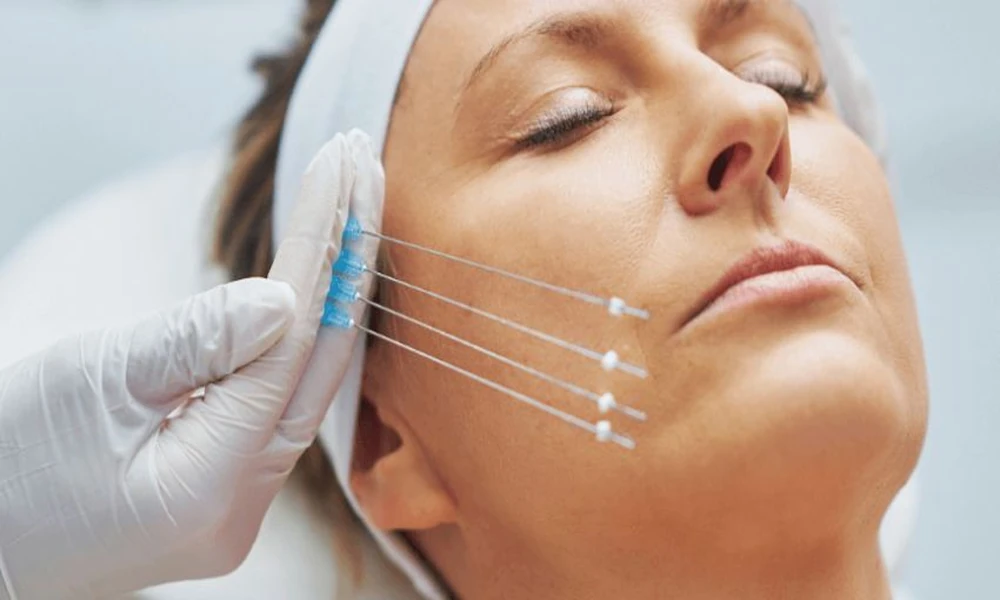
Ready to turn back time without going under the knife? Non surgical facial thread lifting has emerged as a go-to solution for those seeking a refreshed look with minimal disruption to daily life. But is it all smooth sailing, or are there important caveats to consider?
Understanding Non-Surgical Facial Thread Lifting
What Is a Thread Lift?
A thread lift is a minimally invasive cosmetic procedure that addresses sagging facial contours using absorbable sutures. Unlike a traditional facelift, which requires surgical incisions and significant downtime, thread lifting offers an alternative with a much quicker recovery.
How Does the Procedure Work?
The process begins with local anesthesia. Specialized threads, often made from polylactic acid (PLLA), are inserted beneath the skin via a needle. Tiny cones along the thread anchor to tissue, allowing the practitioner to gently reposition and lift sagging areas. Over time, these threads dissolve, but not before stimulating collagen production and subtle volumization.
Typical Candidates and Skin Considerations
The ideal candidate typically falls between their mid-30s and 50s, displaying mild to moderate sagging, like more visible nasolabial folds or a less defined jawline. Skin thickness matters: overly thin or excessively lax skin may not achieve optimal results. Those averse to surgical intervention, including men and individuals with rounder faces or facial asymmetry, often find this treatment attractive.
Key Benefits of Non-Surgical Thread Lifting
Immediate Lifting and Repositioning Effects
Perhaps the most appealing aspect of a thread lift is the immediacy. Once the threads are in position, patients notice a visible lift, usually about half the degree of a surgical facelift. No waiting months for results.
Collagen Stimulation and Tissue Volumization
It’s not just about pulling skin tighter. The PLLA and PLGA materials in thread lifts work as biostimulators, prompting new collagen formation. This process gradually improves skin quality, firmness, and volume for up to two years post-treatment.
Minimally Invasive with Short Recovery Time
No general anesthesia. No overnight hospital stays. Most procedures wrap up in under an hour, with swelling and bruising often subsiding within a few days. Many patients return to work almost immediately, depending on their job and comfort with mild, temporary side effects.
Suitability for Diverse Patient Profiles
Thread lifting accommodates a range of facial types and goals. It’s especially useful when fillers might not be ideal or where subtle reshaping is preferred. This versatility makes it an attractive option for first-time facial rejuvenation seekers.
Limitations Compared to Surgical Facelifts
Degree of Lift and Longevity of Results
A thread lift delivers about 50% of the lift achieved with surgery. Results are temporary, generally lasting 12 to 24 months, whereas surgical outcomes stretch for years. For advanced sagging or those seeking dramatic transformation, surgery remains the gold standard.
Not Suitable for Severe Skin Laxity
Patients with significant skin looseness or very thin skin are not good candidates. Threads can become visible or palpable under thin skin, and the lifting effect may fall short for those with excess laxity.
Potential Visibility or Palpability of Threads
Because threads are inserted just beneath the skin, there’s a small risk they can be felt or seen, especially in patients with less subcutaneous tissue. Proper patient selection minimizes this, but it remains a consideration.
Risks and Side Effects
While thread lifting is relatively safe, it is not risk-free. Swelling and bruising are common but brief. Rarely, infection or hypersensitivity may occur. Comprehensive medical and aesthetic history assessments are critical before moving ahead.
Comparing Thread Lifting with Alternative Anti-Aging Treatments
| Treatment Type | Invasiveness | Recovery Time | Duration of Results | Degree of Lift |
|————————|——————|—————|——————–|————————|
| Thread Lift | Minimally invasive| 1-3 days | 1-2 years | Moderate (50% of surgical)|
| Surgical Facelift | Surgical | 2-4 weeks | 5-10 years | Significant |
| Dermal Fillers/Toxins | Minimally invasive| Hours-2 days | 6-18 months | Mild to moderate |
| Energy-Based Devices | Non-invasive | None-1 day | Variable | Mild |
Thread lifts are a sweet spot between fillers and surgery, offering more lift than injectables but less than surgical intervention.
Safety, Aftercare, and Patient Experience
Side effects like swelling and bruising are typically minor, resolving within a couple of days. Infection and pain are uncommon but possible. Patients should avoid vigorous activity and facial manipulation for several days post-procedure to protect thread placement and maximize results.
Making the Right Choice: Is Thread Lifting Right for You?
Personal goals dictate the ideal approach. Those with early signs of aging and realistic expectations are often happiest with their results. A detailed consultation, reviewing skin type, facial structure, and medical history, is non-negotiable. Sometimes, practitioners combine thread lifts with fillers or other rejuvenation treatments for more comprehensive effects. Reputable clinics, such as Clinique Anti Aging threadlift, can guide you through these options based on your unique needs.
Future Trends and Innovations in Thread Lifting
Suture technology continues to evolve, with new materials enhancing safety, comfort, and longevity. As practitioners increasingly blend thread lifts with other modalities, patients can anticipate even more natural, lasting facial rejuvenation in the future.
Thread lifting is not a miracle, but for the right candidate, it can be a remarkable bridge between simple injectables and full surgical facelift, delivering lift, volume, and a fresher face with minimal fuss.
